

Explore the sweeping layoffs at major technology firms like Tata Consultancy Services, Microsoft, and Intel in 2025. Understand the underlying causes—ranging from tech skill mismatches to massive AI investments—and learn what this means for IT professionals, industry trends, and the future of work.
Table of Contents
A Tumultuous Year for Tech Talent
2025 has emerged as a year marked by large-scale layoffs across several IT giants. Companies are reimagining their workforce amid rapid automation, changing client demands, and continued investment in artificial intelligence.
TCS Layoffs: Why Over 12,000 Jobs Are at Risk
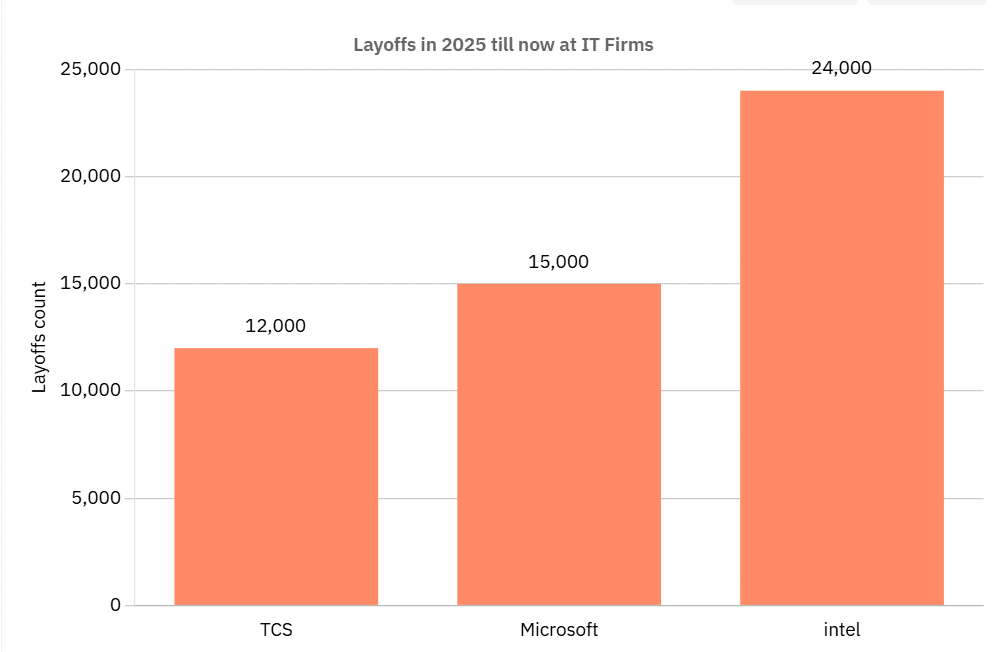
- Scale & Impact: Tata Consultancy Services, India’s largest IT firm, is letting go of approximately 2% of its global workforce—over 12,000 employees—mainly from middle and senior management ranks.
- Reason: TCS leadership maintains that the cuts are due to “skill mismatch” and limited redeployment options—not direct AI-driven productivity gains. However, experts view this as a signal of broader sector shifts as AI adoption accelerates.
- HR Support: TCS has pledged notice period compensation, severance packages, extended insurance, career counseling, and outplacement support to departing employees.
- Industry Context: The Indian IT sector, employing nearly 5.7 million people, faces growing pressures from both technological change and economic uncertainties. Layoffs have sounded the alarm for software professionals concerned about future job security.
Microsoft’s Massive Restructuring: Doubling Down on AI
- Job Cuts: Microsoft has laid off over 15,000 employees in 2025—roughly 7% of its global workforce—despite record-high stock prices and robust financial performance.
- The AI Mandate: CEO Satya Nadella and other executives have openly tied workforce changes to their $80 billion annual AI infrastructure investment. Mandatory AI tool usage (like Copilot) is now part of staff evaluations, and jobs considered “redundant” by automation are being eliminated.
- Outlook: The tech giant isn’t facing a downturn—these changes reflect a strategic pivot to lead in AI-driven software and cloud services.
Intel: Drastic Downsizing to Stay Competitive
- Scale: Intel will cut more than 25,000 jobs by the end of 2025, aiming to bring its workforce to around 75,000 from nearly 109,000 a year prior—a reduction of about 23%.
- Why: These job cuts are part of a broad cost-cutting and efficiency push after several challenging quarters and significant losses. Intel is also pausing some global expansion projects to focus on core manufacturing efficiency.
- Wider Implications: Intel’s workforce overhaul demonstrates how even leading chipmakers must adapt to a rapidly shifting industry landscape.
What Does This Mean for IT Professionals?
- Volatility on the Rise: The risk of redundancy is especially acute for mid-to-senior technical and management positions. Skill mismatches and inability to upskill in AI or cloud technologies are increasingly cited as reasons for layoffs.
- Need for Continuous Learning: Employees who can adapt to new AI-powered workflows or specialize in emerging tech areas may be better positioned for long-term success.
- Support for the Outgoing: Most companies are offering transition support but the job market remains uncertain, especially for those in traditional IT roles being made obsolete by automation.
Conclusion: The AI Revolution Reshapes the Workforce
The convergence of economic uncertainty and record-setting AI investments is leading to a leaner, more strategically focused tech workforce. Adaptability, continuous upskilling, and a willingness to embrace AI-driven roles are fast becoming essential for anyone in the IT industry.


